
A corporate identity system Malaysia businesses can apply consistently is worth far more than a beautiful logo sitting in a folder. Identity is what customers recognise before they read a single word of your copy. When every touchpoint looks deliberate, buyers assume the company behind it is equally deliberate. That assumption shapes pricing power, recruitment, and trust. At Envicion Studio, we build identity systems for property developers and for businesses in completely unrelated industries, because the underlying discipline is the same. Developers who want the wider picture can also read our complete guide to property branding and rebranding in Malaysia.
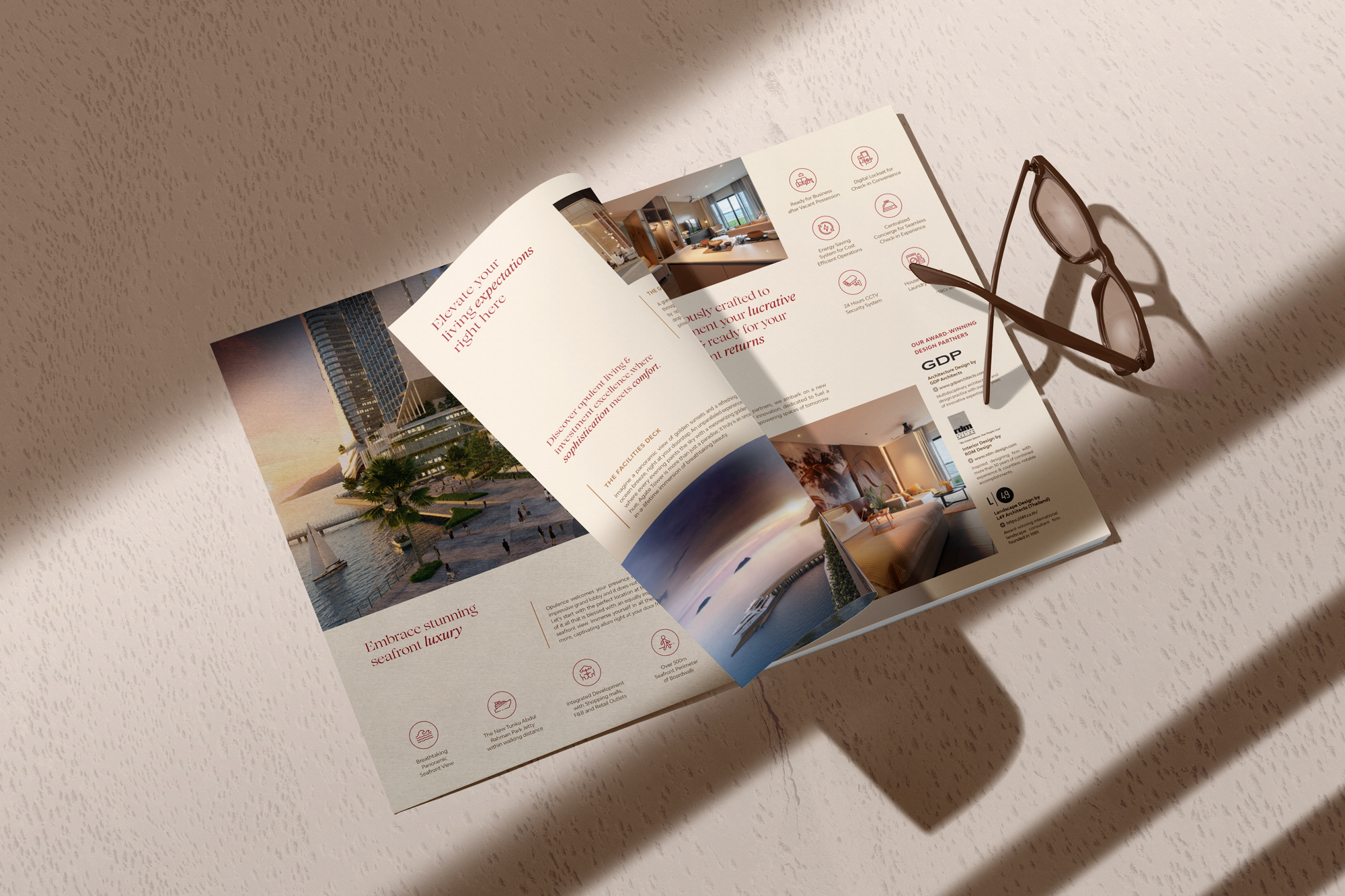
What a Corporate Identity System Actually Is
A corporate identity system is the complete, documented set of visual and verbal assets that expresses your brand. It is not one file. It is a governed toolkit: primary and secondary marks, clear space rules, colour values across print and screen, a typographic hierarchy, photography direction, iconography, layout grids, and the templates your team uses every day. Crucially, it includes the rules for how those elements behave together, so a junior executive and an external printer produce the same result.
Think of a logo as a signature and the identity system as the handwriting. A signature proves who signed. Handwriting shows up in every sentence you ever write. A documented corporate identity system Malaysia companies actually enforce does the same job across every asset they produce.
Corporate Identity System Malaysia: The Core Components
1. The Logo Suite
One logo is never enough. A working suite includes a primary lockup, a horizontal variant, a stacked variant, a monogram or app icon, and monochrome versions. Each one carries defined minimum sizes and clear space. Consequently, your brand survives a shophouse signboard, an Instagram avatar, and an embroidered polo shirt without distortion.
2. Colour Architecture
We define a primary palette, a supporting palette, and functional colours for states such as success or warning. Every colour is specified in CMYK, RGB, HEX, and where relevant Pantone and vinyl equivalents. This detail matters in Malaysia, where a single campaign may run across offset brochures, LED screens, fabric banners, and digital ads within the same week.
3. Typography and Language
Type does the heaviest lifting in any identity. We select a display face, a body face, and a fallback system font for documents and email. In addition, we set the tone of voice: how the brand introduces itself, how it explains price, how it handles complaints. Bilingual and trilingual environments need extra care, since Bahasa Malaysia, English, and Chinese type do not always sit comfortably in the same grid.
4. Graphic Language and Imagery
Patterns, shapes, grid behaviour, illustration style, and photography direction give a brand recognisability beyond the logo. When your photography is consistent, audiences identify your posts in a crowded feed before they see your name.
5. Templates, Applications, and Governance
Finally, we deliver the practical layer: presentation decks, letterheads, quotation and invoice formats, social templates, email signatures, uniform and vehicle applications, signage specifications, and a brand manual that a new hire can follow on day one. Governance is what keeps the system alive after handover.
Why Property Developers Need an Identity System, Not Just Project Logos
Most Malaysian developers accumulate project logos over the years. Each launch gets a fresh mark, a fresh palette, and a fresh brochure style. The projects look strong individually, yet the corporate brand behind them stays invisible. As a result, the developer earns no compounding equity, and each new launch has to buy trust from scratch.
A corporate identity system fixes the relationship between the master brand and the project brands. Buyers then recognise the developer name as a promise of quality, which shortens the trust-building phase of every future launch. Our property marketing team sees this pattern repeatedly on show gallery floors.
Why Non-Property Businesses Need the Same Rigour
Manufacturers, clinics, law firms, logistics operators, F&B groups, and technology companies all face the same challenge from a different angle. Their materials are produced by many hands: a distributor, an agency, an intern, a printer in another state. Without a documented system, the brand drifts within months.
For these clients, an identity system is an operational tool as much as a creative one. It removes debate, speeds up production, and protects the investment already made in awareness. If you plan to register your marks, a consistent, well-documented identity also makes your filing with MyIPO considerably cleaner.
Signs Your Current Identity System Has Stopped Working
- Your team keeps asking which version of the logo is correct.
- Colours look noticeably different across your website, brochures, and signage.
- New staff design materials from scratch because no templates exist.
- Your visual style now looks older than the customers you want to attract.
- You have expanded into new services or markets the original identity never anticipated.
If two or more of those statements describe your business, a structured rebrand is usually cheaper than another year of inconsistency.
How We Build a Corporate Identity System Malaysia Brands Can Run On
We begin with discovery and audit, then move to positioning and strategy, then design, then documentation, then rollout support. Every stage produces something you can decide on, so you are never asked to approve a logo without understanding the thinking behind it. We also stay involved during application, because the value of a system appears only when it is used correctly.
How Long a Corporate Identity System Takes to Build
Timelines are the first question most clients ask. A corporate identity system Malaysia businesses of moderate size need usually takes six to twelve weeks from kick-off to handover. Discovery and audit occupy the first fortnight. Design exploration and refinement fill the middle stretch. Documentation, file preparation, and training close the project.
Larger organisations should allow more time. The design work does not grow, but approval cycles lengthen when several divisions or joint venture partners must agree. In our experience, the fastest projects share one trait: a single decision maker stays involved from start to finish. The slowest ones collect feedback from a committee in stages, then revisit settled decisions late.
Questions to Ask Before You Commission One
Scope questions protect your budget better than price negotiation does. Ask these before signing anything.
- Which deliverables are included, and which are quoted separately later?
- How many logo variants, colour specifications, and templates will I receive?
- Do I receive editable source files and the correct font licences?
- Is a written brand manual included, or only design files?
- Who supports the rollout, and is that time chargeable?
- How will the system handle sub-brands, projects, or partner co-branding?
Honest answers to those six questions reveal whether you are buying a logo with extras attached or a genuine system. Furthermore, they surface the assumptions that usually cause disputes near the end of a project, while there is still time to adjust scope calmly.
Ready to commission a corporate identity system Malaysia customers will recognise anywhere? Talk to Envicion Studio and we will map the scope, timeline, and investment for your business.